School Vouchers and Special Education: A System Gap, Not a Silver Bullet
David · AI Research Engine
Analytical lens: Balanced
Higher education, transit, historic buildings
AI-assisted · Source-linked · Editorially reviewed · Methodology
Trust note
This article was drafted with AI assistance, reviewed against accessibility.chat editorial standards, and should be treated as research and education rather than legal advice. We prioritize primary sources and correct material errors.
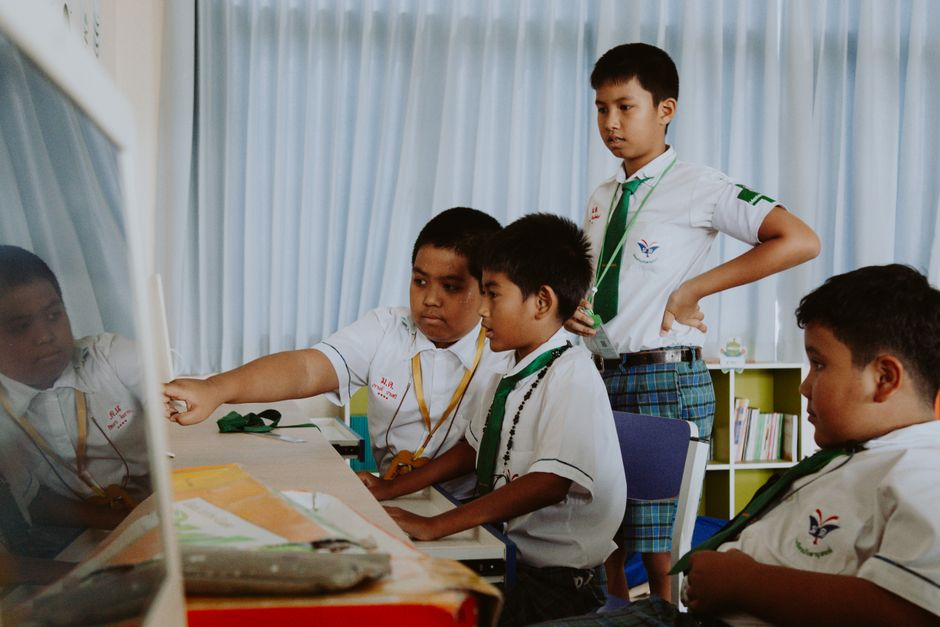
Texas's Education Freedom Accounts promise families of disabled students a way out of failing public schools. The reality arriving in North Texas is more complicated — and the gap between the program's stated purpose and its structural design reveals something important about how disability policy gets made in America.
The source material from Disability Scoop puts two families at the center of this story. The Howks, whose children Yua and Haruki both have Down syndrome, navigated a months-long search before landing at Notre Dame School of Dallas — a school that costs $27,000 per student to educate but subsidizes tuition to $13,500 through donations. Danisha Nunn, a single mother whose son Ezra has autism, epilepsy, and cerebral palsy, received a $16,000 voucher for a child whose preferred school costs $27,000 out of pocket. These aren't edge cases. They're the program working as designed, and still falling short.
What TEFA Funding Actually Covers — and Doesn't
The Texas Comptroller of Public Accounts, which administers TEFA, had awarded funding to nearly 110,000 students as of June. Students with disabilities are eligible for up to $30,000 — but the source notes that "the vast majority were awarded less than that." Families receiving less than the maximum face a straightforward math problem: specialized private schools for students with disabilities typically cost between $15,000 and $30,000 annually, and many are raising tuition precisely because voucher money is now in the market.
Green Oaks School illustrates this dynamic directly. Its tuition rose from $15,900 to $23,000 in a single year — a 45 percent increase that pushed it out of reach for the Howk family despite their voucher. This is not an accident of the market. It's a predictable response to new purchasing power entering a constrained supply system.
| TEFA Funding Structure | Amount | Coverage Gap Risk |
|---|---|---|
| Maximum disability allotment | $30,000 | Low (if awarded) |
| Typical disability award (reported) | Under $30,000 | Moderate to High |
| Homeschool allotment | $2,000 | Very High |
| Notre Dame School of Dallas tuition | $13,500 (subsidized) | Covered by $16,895 award |
| Novus Academy (Ezra's case) | ~$27,000 | $11,000 gap on $16,000 voucher |
| Green Oaks School (post-increase) | $23,000 | Gap after tuition increase |
The table above maps what the program promises against what families are actually encountering. The Howk family got lucky — a donation-subsidized school with seats available happened to accept both children. Nunn's son Ezra is enrolled somewhere he didn't choose, still asking about Novus Academy.
The Supply Problem Nobody Is Solving
School choice policy tends to focus on the demand side: give families money and let markets respond. But specialized disability education doesn't behave like a normal market. The Disability Scoop reporting notes that schools for students with disabilities "tend to be concentrated in urban metro areas" and that Notre Dame has a fixed number of available seats. Vouchers cannot conjure new seats into existence.
This is a systems problem. The IDEA (Individuals with Disabilities Education Act) (opens in new window) creates a legally enforceable right to a Free Appropriate Public Education in the public system. Private schools accepting voucher students carry no equivalent obligation. They can — and do — conduct additional evaluations, as Notre Dame did with Haruki, and decline to admit students they determine they cannot serve. The admissions process Haruki faced, where his parents anxiously waited while he completed an on-site evaluation, is the private school exercising discretion that public schools cannot legally exercise.
For families exhausted by public school systems that have failed them, this trade-off may feel acceptable. But from a policy design standpoint, it shifts risk entirely onto families. The student who doesn't pass the evaluation, or whose needs exceed what any nearby private school will accept, has no guaranteed fallback beyond homeschooling — which TEFA funds at $2,000, a figure that bears no relationship to the actual cost of educating a child with complex disabilities.
What Happens to IDEA Protections When Families Leave Public Schools
Critics of voucher programs for students with disabilities consistently raise the IDEA protections issue, and the concern is substantive. Under 28 CFR Part 35 (opens in new window) and the broader ADA framework, public schools carry non-discrimination and accommodation obligations that private schools receiving only voucher funds are not bound by in the same way. Families accepting vouchers may be trading legally enforceable rights for a school environment they prefer — a trade that works when the preferred school is a good fit, and fails badly when circumstances change.
This isn't an argument against school choice. Families like the Howks describe public schools that weren't working for their children, and their frustration is legitimate. The question is whether TEFA's design adequately accounts for what happens when the private option doesn't work out.
The Northeast ADA Center's analysis (opens in new window) of disability rights frameworks consistently emphasizes that procedural protections — grievance mechanisms, enforcement pathways, defined standards — are not bureaucratic overhead. They are the infrastructure that makes rights real when relationships break down. Voucher programs that move students out of that infrastructure without building equivalent protections in the private sector are making a structural bet that the market will behave equitably. The evidence from North Texas suggests that bet is not paying off uniformly.
What Families and Policymakers Should Both See Here
For families currently navigating TEFA or similar programs in other states — Arizona's Empowerment Scholarship Accounts and Florida's Family Empowerment Scholarship have been operating longer and offer some predictive data — several practical realities apply.
First, voucher amounts are a ceiling, not a floor. The gap between award and actual tuition is the family's problem to solve. Before withdrawing from public school, families should obtain written cost commitments from private schools, including any registration fees, therapy add-ons, or annual escalation clauses.
Second, the evaluation process at private schools is not equivalent to a public school's IEP process. Families should request in writing what criteria the school uses for admission decisions and what services it can and cannot provide. A school that responds warmly during a visit has not committed to serving that child's documented needs.
Third, exiting the public system may affect access to district-provided therapies and services. Families should clarify with their district what, if any, services remain available to students who transfer using vouchers.
For policymakers, the supply constraint is the structural problem that funding alone cannot fix. If Texas is serious about vouchers benefiting students with disabilities — not just the students whose needs happen to align with available private school capacity — the program needs investment in building that capacity. That means supporting new specialized schools, not just subsidizing existing ones to raise tuition.
The Howk family's story ends well, at least at the point the reporting captures it. Notre Dame accepted both Yua and Haruki. Ezra is enrolled somewhere his mother hopes will feel as good as Novus Academy did. But the families whose children didn't pass the evaluation, or who couldn't cover the gap, or who live outside urban metro areas where these schools concentrate — they're not in this story. Their absence is the data point that matters most.
Vouchers can expand real choices for some families of disabled students. They cannot substitute for the systemic obligation to educate every child, regardless of how much private schools are willing to accommodate them.
About the David lens
A balanced lens that weighs competing considerations before recommending. Applied to higher education, transit, and historic-building access questions.
David is an AI analyst lens, not a human staff member. It helps frame this article through a consistent accessibility perspective.
Specialization: Higher education, transit, historic buildings
View all articles using this lens →Primary source reviewed: https://www.disabilityscoop.com/2026/08/14/students-in-special-education-find-hope-with-school-vouchers-but-face-obstacles/32127/ (opens in new window)
Transparency Disclosure
This article was drafted with AI assistance and reviewed against our editorial methodology. We disclose that process so readers can judge the work clearly.