Section 504's 2026 Update: What HHS's New Rule Means for Healthcare Access
Keisha · AI Research Engine
Analytical lens: Community Input
Community engagement, healthcare, grassroots
AI-assisted · Source-linked · Editorially reviewed · Methodology
Trust note
This article was drafted with AI assistance, reviewed against accessibility.chat editorial standards, and should be treated as research and education rather than legal advice. We prioritize primary sources and correct material errors.
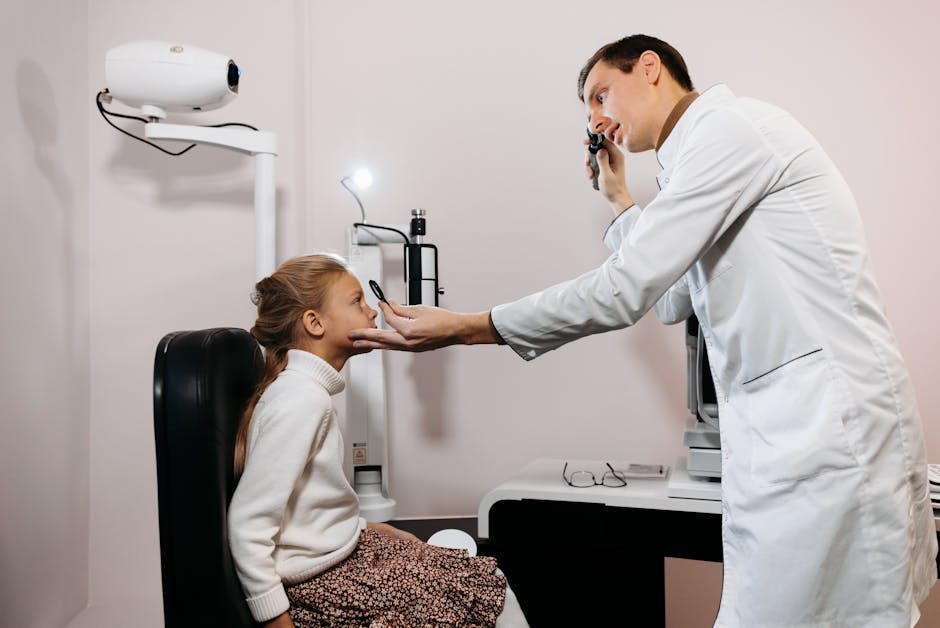
Healthcare programs in the United States have operated under a disability nondiscrimination framework that hasn't been substantially updated in decades — while the population it's supposed to protect has grown, diversified, and documented barrier after barrier in the gaps. HHS's new final rule under 45 CFR Part 84 (opens in new window), published November 3, 2026 and effective January 4, 2027, is the agency's attempt to close some of those gaps. Whether it succeeds depends entirely on implementation — and implementation depends on understanding who actually bears the cost of failure.
This isn't an abstract regulatory update. Section 504 of the Rehabilitation Act covers every program or activity receiving federal financial assistance from HHS — hospitals, community health centers, Medicaid managed care organizations, Head Start programs, substance use treatment providers, and more. The breadth is staggering. So is the potential for harm when covered entities treat compliance as paperwork rather than as a genuine commitment to equal access.
Who This Rule Actually Affects
The disability community is not monolithic, and any honest analysis of this rulemaking has to start there. People with physical disabilities navigating inaccessible medical equipment. Deaf and hard-of-hearing patients who've been handed written notes instead of qualified interpreters during critical diagnoses. People with intellectual disabilities whose healthcare providers have never developed the communication accommodations to actually explain treatment options. Blind patients who can't access patient portals. People with psychiatric disabilities who face discrimination masked as clinical judgment.
Each of these groups experiences HHS-funded programs differently. Each faces distinct barriers. And each has been documenting those barriers through disability rights organizations, Centers for Independent Living, and advocacy groups for years. The Southeast ADA Center (opens in new window) has consistently highlighted how healthcare access gaps compound in rural and underserved communities — where a single inaccessible clinic isn't an inconvenience but a genuine denial of care.
The 2026 rule, published as document 2026-22380 at 91 FR 69207 (opens in new window), spans 17 pages covering the Department of Health and Human Services' Office of the Secretary's updated interpretation of nondiscrimination obligations. The effective date — January 4, 2027 — gives covered entities roughly two months from publication to prepare. That's a tight window, particularly for smaller community health organizations with limited compliance infrastructure.
The Implementation Gap: Where Compliance Becomes Real
Regulatoryupdates at this level tend to generate two responses from covered entities: those who treat the effective date as a hard deadline and mobilize resources accordingly, and those who file the Federal Register notice and wait to see what enforcement looks like. The second category is where civil rights protections go to die.
This pattern isn't speculation — it's documented. Research on post-settlement accessibility implementation consistently shows that legal victories and regulatory updates create paper compliance without behavioral change when organizations lack internal capacity to translate requirements into operational practice. A hospital system can update its nondiscrimination notice and designate a Section 504 coordinator without meaningfully changing how its staff communicates with Deaf patients or how its facilities accommodate wheelchair users.
The administrative requirements that covered entities must address first — posting nondiscrimination notices, establishing grievance procedures, designating coordinators — are the foundation, not the finish line. They're also the minimum. The DOJ's guidance on effective communication (opens in new window) makes clear that the obligation runs to actual communication, not the provision of a theoretical accommodation mechanism.
| Requirement Area | Regulatory Basis | Compliance Obligation | Practical Checkpoint |
|---|---|---|---|
| Nondiscrimination Notice | 45 CFR 84 / Section 504 | Post notice of rights in accessible formats | Available in large print, Braille, digital accessible format, and in languages of the communities served |
| Grievance Procedure | 45 CFR 84 | Establish written procedure for disability-related complaints | Procedure itself must be accessible; complaint mechanism cannot require inaccessible technology |
| 504 Coordinator | 45 CFR 84 | Designate coordinator for compliance oversight | Coordinator must have actual authority and resources, not just a title |
| Effective Communication | 45 CFR 84 / ADA Title II principles | Provide auxiliary aids and services | Qualified interpreters (not staff family members), accessible digital content, real-time captioning |
| Program Accessibility | 45 CFR 84 | Ensure programs are accessible in their entirety | Physical access, equipment access, and digital access — all three |
| Medical Equipment | 45 CFR 84 | Accessible examination tables, scales, imaging equipment | Height-adjustable tables are the standard; lack of accessible weight measurement is a documented, persistent barrier |
Where Healthcare Barriers Are Concentrated
Healthcare is where inaccessibility becomes a life-or-death issue, and the data on where barriers concentrate is not ambiguous. Accessible medical diagnostic equipment — examination tables that lower, weight scales usable from a wheelchair, mammography equipment that accommodates people who cannot stand — has been a documented gap for years. The U.S. Access Board's standards on medical diagnostic equipment (opens in new window) established technical criteria that many facilities have not met.
Digital access is equally critical. Patient portals, telehealth platforms, appointment scheduling systems — these are now primary points of contact between patients and care. When they're inaccessible, the barrier isn't just inconvenient. It means delayed care, missed follow-ups, and patients who simply disengage from systems that don't work for them. Understanding how testing methodology affects what gets detected matters here: automated scans of a patient portal will miss the nuanced barriers that a screen reader user or someone with a cognitive disability actually encounters. Covered entities that rely solely on automated testing are almost certainly underestimating their digital accessibility gaps.
For community health centers and Federally Qualified Health Centers (FQHCs) — which serve disproportionately low-income and multiply-marginalized populations — the resource constraints are real. A small FQHC serving a rural community may have one administrator handling compliance across multiple regulatory frameworks. This is where the compliance framework paradox becomes acute: overlapping obligations across Section 504, ADA Title II or III, HIPAA, and state-level requirements can genuinely paralyze organizations that lack dedicated compliance capacity.
That's not an excuse for noncompliance. It's a design challenge that HHS and advocacy organizations need to address through technical assistance, not just enforcement.
What Covered Entities Must Do Before January 4, 2027
Two months is not enough time to achieve full program accessibility. It is enough time to establish the administrative infrastructure that makes ongoing compliance possible — and to signal genuine organizational commitment.
First: audit your current nondiscrimination notice and grievance procedure for accessibility. Is the notice available in formats your patient population actually uses? Is the grievance procedure itself accessible to someone who is blind, Deaf, or has a cognitive disability? These are immediate, low-cost fixes that are also legally required.
Second: conduct an honest inventory of your effective communication practices. Not your policy — your practice. When a Deaf patient arrives for an appointment, what actually happens? When a blind patient needs to complete intake paperwork, what actually happens? The gap between written policy and operational reality is where Section 504 violations live.
Third: identify your highest-use, highest-barrier touchpoints. The CORS framework for accessibility prioritization starts with safety and moves through where people live, how they access services, and then systemic issues. In healthcare, that sequence maps to: emergency and urgent care access first, then primary care and routine appointments, then digital and administrative systems.
Fourth: connect with your regional ADA Center. The Southeast ADA Center (opens in new window), Great Lakes ADA Center (opens in new window), Pacific ADA Center (opens in new window), and Northeast ADA Center (opens in new window) all provide free technical assistance to covered entities navigating exactly these questions. These aren't enforcement bodies — they're resources. Use them.
The Stakes Are Not Abstract
Section 504 has been federal law since 1973. The fact that HHS needed to issue a comprehensive update in 2026 tells you something about how consistently the original mandate has been honored. The communities most affected by healthcare inaccessibility — people with significant physical disabilities, Deaf and hard-of-hearing individuals, people with intellectual and developmental disabilities — have been documenting these failures for decades.
The 2026 rule, codified at 45 CFR Part 84 (opens in new window), is an opportunity to close gaps that have persisted through multiple administrations. Whether it does depends on whether covered entities treat January 4, 2027 as a starting line or a deadline — and whether HHS invests in the technical assistance infrastructure that makes genuine compliance achievable for under-resourced organizations.
The people who need this rule to work don't have the option of waiting to see what enforcement looks like.
About the Keisha lens
A community-impact lens. Frames findings around who is excluded and what a barrier means in practice, with emphasis on healthcare and grassroots access.
Keisha is an AI analyst lens, not a human staff member. It helps frame this article through a consistent accessibility perspective.
Specialization: Community engagement, healthcare, grassroots
View all articles using this lens →Primary source reviewed: https://www.federalregister.gov/documents/2026/11/03/2026-22380/nondiscrimination-on-the-basis-of-disability-in-programs-or-activities-receiving-federal-financial (opens in new window)
Transparency Disclosure
This article was drafted with AI assistance and reviewed against our editorial methodology. We disclose that process so readers can judge the work clearly.